

Career Management
Control your whole career in one place and maximise your potential

Alignment
Create a career you love waking up to

Project Management
Run projects faster and smarter all in one centralised location

Productivity Management
Streamline your workflow and double your performance

Knowledge Management
Remember everything with your personal digital brain

Performance Management
Achieve consistent performances and world class results

Subcontractor & Client Management
Effortlessly management subcontractors and clients

Skill Development
Develop high value skills that set you apart from competition

The Playbook
Bring in unique insights to increase commercial success

Community & Courses
Unlock the full potential of the system

Payments
Innovative payment solutions for modern projects
The Two Camps of Construction Professionals: Choosing the Path to Success
Saturday, October 05, 2024

Strategy is more important today than it has ever been because we have so much choice.
I want you to become more strategic in your career and make longer term decisions so that you can scale faster and faster and earn more year on year.
I hope this articles helps you make the right choices
Let’s go….
In the world of construction, professionals often find themselves at a crossroads, deciding between two distinct paths.
These paths, or "camps," represent different approaches to career growth and success. Understanding these camps and their long-term implications can help construction professionals make informed decisions about their careers.
Camp 1: Fast Track to Promotions and Titles
The first camp is characterised by an eagerness to move quickly up the career ladder. Professionals in this camp focus on achieving promotions and accumulating titles as rapidly as possible. This approach is driven by the desire for immediate recognition and advancement.
Camp 2: The Slow-Down-to-Speed-Up Approach
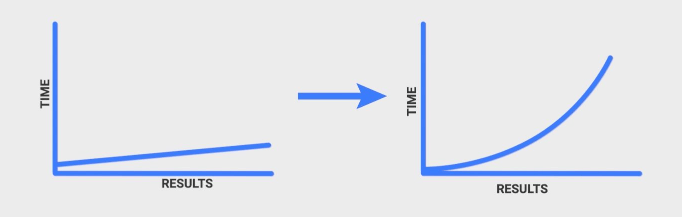
The second camp advocates a more measured approach. Here, the emphasis is on slowing down initially to build a strong foundation of skills and experience so that you can speed up later. This method believes in the philosophy of "slow down to speed up," suggesting that by taking the time to develop quality work and expertise early on, one can accelerate their career progression later.
The Path to Senior Quantity Surveyor (QS) and Beyond
For those aspiring to become a Senior Quantity Surveyor (QS), Camp 2 offers a compelling strategy. By focusing on quality and thoroughness, professionals can establish themselves as reliable and competent. This credibility can pave the way for faster progression from Senior QS to higher roles such as Commercial Director.
Quality vs. Growth: A Crucial Distinction
At the heart of these two approaches lies a fundamental principle about quality and growth:
- Quality Creates Growth: Prioritising quality in your work leads to natural and sustainable growth. When you focus on getting better at what you do, you build a reputation for excellence, which in turn attracts more opportunities and advancements.
- Growth Creates Bloat: On the other hand, if growth becomes the primary goal, it can lead to what is known as "bloat." This occurs when the pursuit of rapid expansion leads to inefficiencies, reduced quality, and ultimately, a decline in performance and reputation.
The Consequences of Misplaced Goals
If the primary objective is to get bigger—to achieve higher positions and greater responsibilities quickly—there is a risk of overlooking the importance of quality. This can result in a scenario where growth is achieved, but at the cost of deteriorating standards and increased inefficiencies.
Conversely, if the focus is on consistently improving and delivering high-quality work, growth will follow as a natural consequence. This type of growth is sustainable and beneficial in the long run, leading to a stronger, more resilient career.
The Takeaway: Make Quality the Goal
In summary, the key to a successful career in construction is to prioritise quality over rapid growth. By making continuous improvement and excellence the primary goals, professionals can achieve sustainable growth and long-term success. This approach not only leads to career advancement but also ensures that the journey to the top is built on a solid foundation of skill and integrity.
So, as you navigate your career path, remember this crucial lesson: If you make getting better the goal, you will get bigger. But if you make getting bigger the goal, you may get bigger, but you will also get worse. Choose wisely, and let quality guide your journey to success.
If you found this valuable and want to apply this to your career, join Construction Labs for FREE
A fun way to progress your career. Simple instructions, courses, workshops, monthly training videos, live streams, community, support, monthly leaderboards, and prizes!
construction-mastery.com/labs
……….
The next question is…
How can you control your career, manage projects efficiently, and become a highly valuable Quantity Surveyor?
This is where Construction Mastery becomes your ultimate solution
Construction Mastery is a digital tool for forward thinking Quantity Surveyors!

More Articles

Why Learning at Work Can Help You Earn More Later
When we think about work, we often focus on making money. But what if I told you that there's a better way to think about it? For quantity surveyors, the best way to succeed is to see work as a chance to learn first and earn money second. This idea might seem surprising, but it can actually help you earn more in the long run!

The Power of a Playbook: Why Every Construction Professional Needs One
In the world of construction, projects often vary in success, even when they seem identical on the surface. It's easy to point fingers at external factors, but a closer examination reveals that the difference lies in the decisions made throughout the project. These decisions, often made without fully leveraging past experiences, can make or break a project’s success. Take, for example, a project where I served as the commercial lead. We achieved an 11% margin, which seemed decent until I learned of another similar project that made a 14% margin. The difference? It wasn’t the materials, the design, or the scope. It was the team—the people and the decisions they made. This realisation led me to wonder: why do outcomes vary so widely when we've built the same thing so many times?

Three Quantity Surveying Career Paths
I have interviewed top 1% Construction Pro’s I have worked with the CEO of Balfour Beatty for 3 months as the only person chosen in the entire company I have friends who have had 5 promotions in 10 years I can see what they have done that is different to others. My hope for this article is to make you aware that there are levels to this game. You can be in a job and work for money You can be in a career and develop your knowledge and skills You can be in mastery and wake up excited every day
But that’s not all Construction Mastery Does
Construction Mastery equips you with everything you need to excel to world-class levels, accelerate your promotions, and become a powerful asset for your company

Career Management
Control your whole career in one place and maximise your potential
Alignment
Create a career you love waking up to
Project Management
Run projects faster and smarter all in one centralised location
Productivity Management
Streamline your workflow and double your performance
Knowledge Management
Remember everything with your personal digital brain
Performance Management
Achieve consistent performances and world class results
Subcontractor & Client Management
Effortlessly management subcontractors and clients
Skill Development
Develop high value skills that set you apart from competition
The Playbook
Bring in unique insights to increased commercial success
Community & Courses
Unlock the full potential of the system
Payments
Innovative payment solutions for modern projects
NEW
© 2024 All Rights Reserved | Construction Mastery